
Interview
Aryn Ward
Musician · Houston • Sapulpa
A Mvskoke and Yuchi composer who beads constellations onto deer hide and writes music for them.

-
01 · On creativity
What does “being creative” mean to you?
Being creative means letting loose and allowing your heart and spirit to become part of whatever you’re making. I believe that just as the Creator created us, we are meant to create, too. There is something deeply spiritual about bringing something into existence that wasn’t there before. I try to carry that connection into everything I make, whether it’s a piece of music, beadwork, or something entirely new. In the Yuchi language, we have gOh@nTOnA, meaning “Creator of Breath.” I love thinking about creativity in that way, as breathing life into something and allowing it to become its own living expression.
-
02 · On becoming
Can you describe the time when you first realized that creating was something you absolutely had to do?
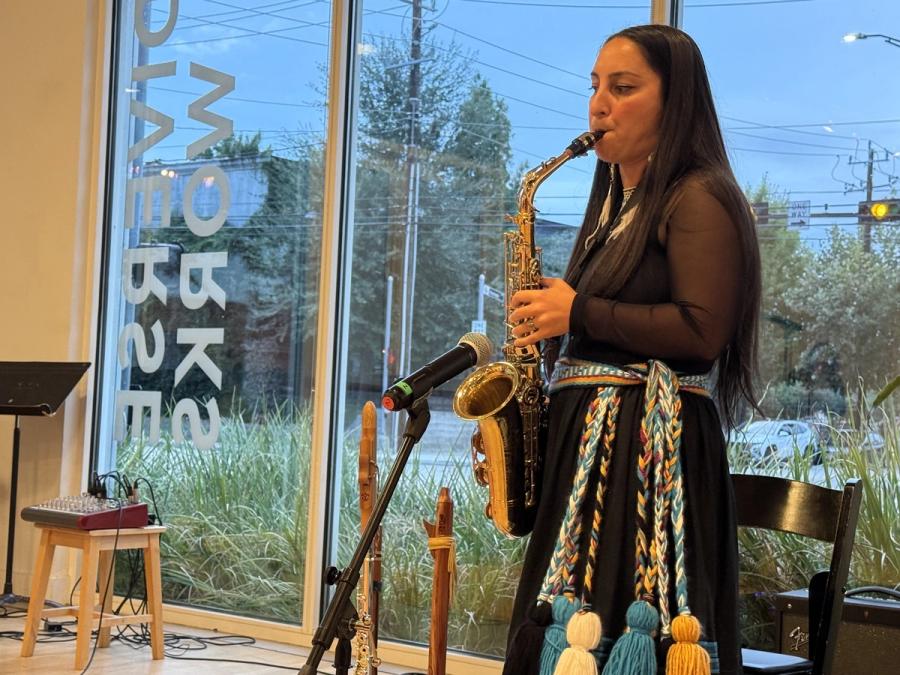
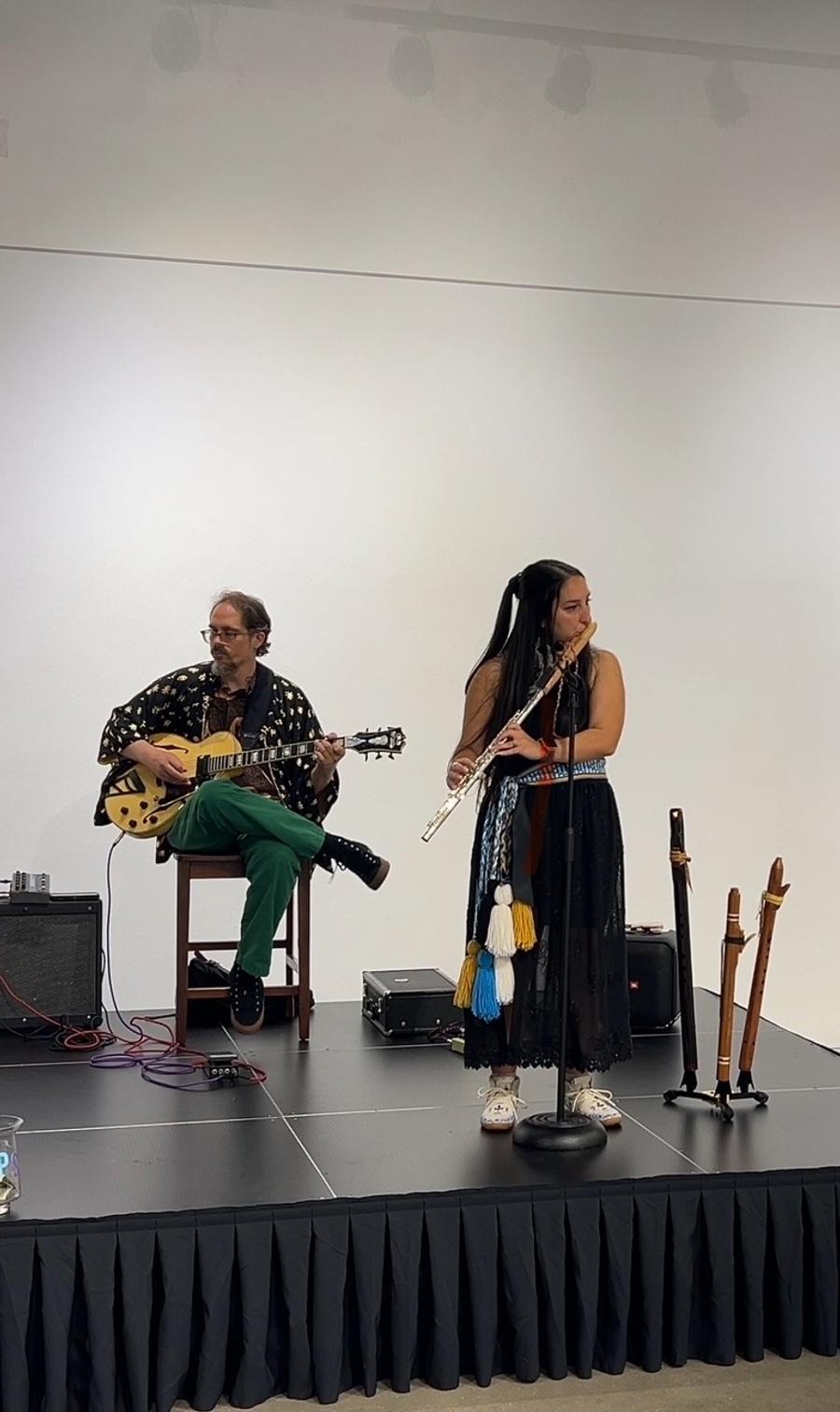
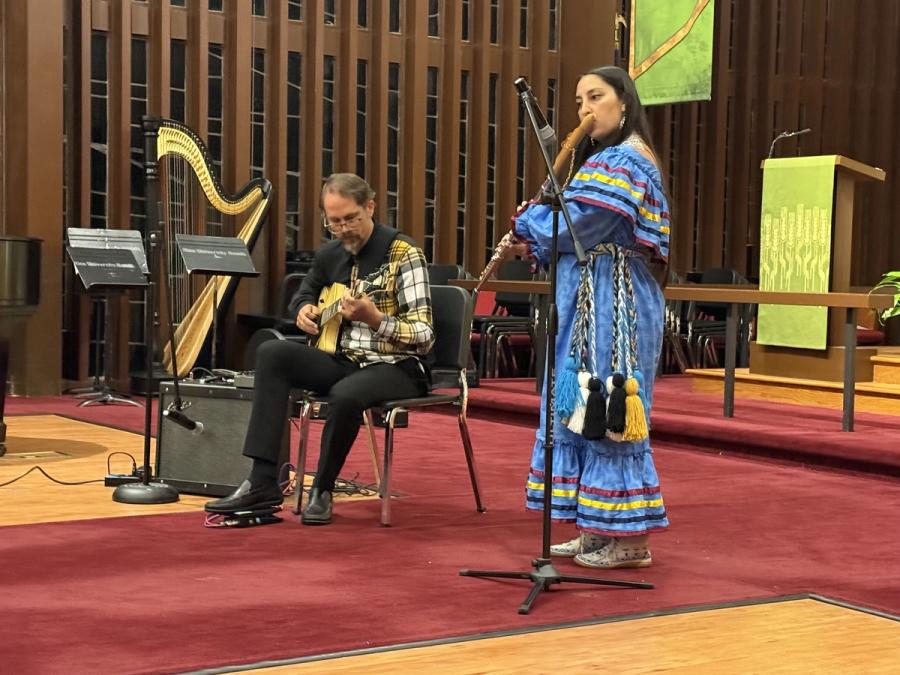
I don’t think there was ever one particular moment. I’ve been creating for as long as I can remember! As a little girl, I was always drawing pictures in the margins of my school notes or making things out of sticks, leaves, and whatever I could find outside. I loved figuring out how things worked and learning how to make them myself. Eventually, creating became such a big part of my personality that I couldn’t imagine life without it. Today, that same curiosity shows up in my music, whether I’m improvising, composing for classical instruments, or experimenting with new sounds. It also comes through in my beadwork and graphic scores made from deer hide. I think that little girl playing outside with sticks and leaves is still very much a part of who I am.
-
03 · On rituals
What kind of creative patterns, routines or rituals do you have?
I actually think boredom is one of the most important parts of creativity! We live in a world where we’re constantly busy or overwhelmed, and I find it difficult to create when my mind is too full. Some of my best ideas come when I have absolutely nothing planned and can just let my mind wander. I also tend to move between different art forms. If I get stuck while composing music, I’ll put it aside and work on something beaded instead. Keeping my hands busy often helps the musical ideas start flowing again. I have four children, and I love encouraging them to make things, experiment, and use their imaginations. They’re constantly inspiring me, and sometimes seeing the world through their eyes reminds me how important it is to create without worrying about whether something is going to turn out perfectly.
-
“ But those little mistakes are part of who we are. They make our work human. ”
-
04 · On favorites
What’s your favorite thing you’ve ever created?
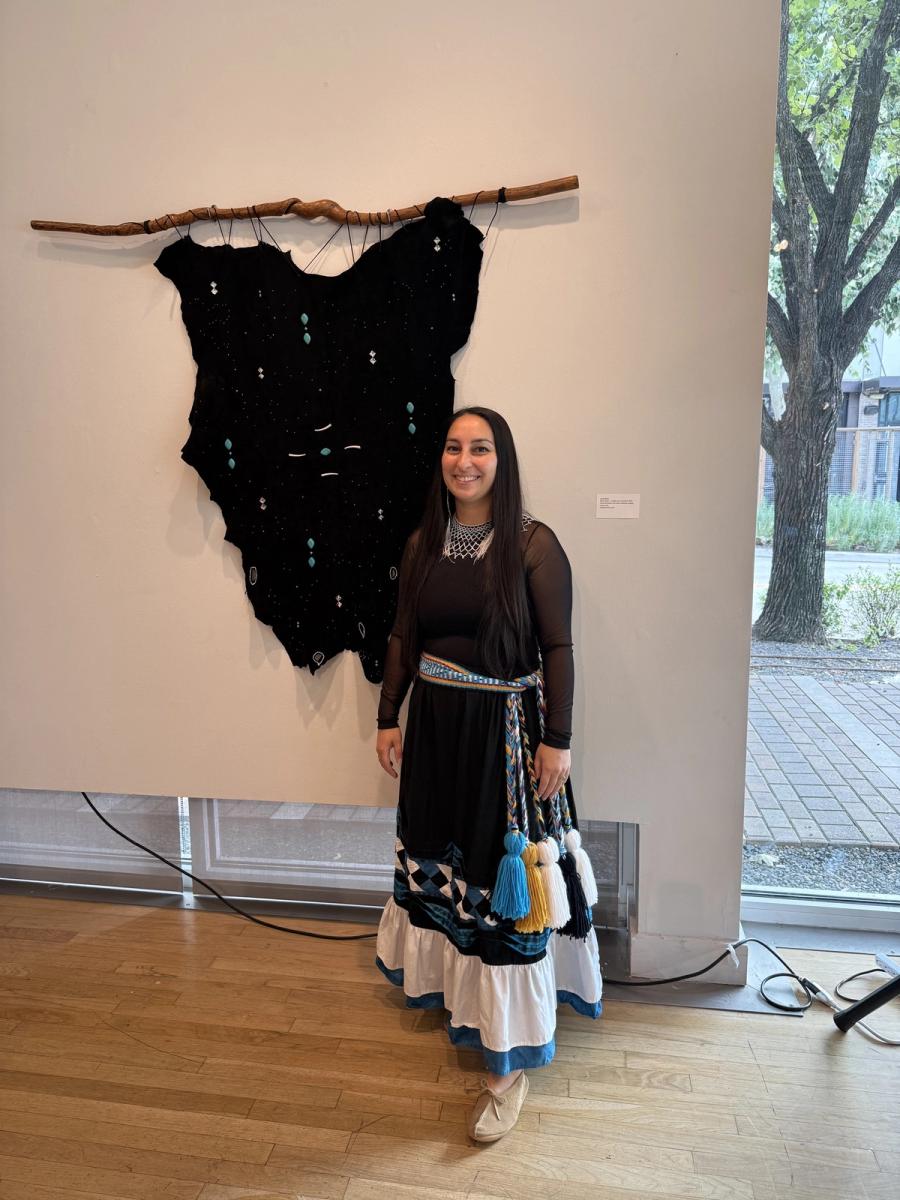
One of my favorite creations is my graphic score, Yuchi Galaxy — yUdjEha zinE wAthl@nE. It’s a piece of visual art that also functions as sheet music for four musicians. I beaded 26 constellations onto a black deer hide and suspended it from a wooden walking stick. Rather than reading traditional musical notation, the musicians interpret the constellations and their relationships to one another to create sound. The piece actually came from a moment of boredom and grew into something much more meaningful. One of its central ideas is celebrating mistakes. There are places in the beadwork where things didn’t go exactly as planned, and rather than hiding them, I chose to make them part of the piece. Those imperfections became part of its story. I think we can be so hard on ourselves, especially as artists and musicians, when something doesn’t turn out the way we imagined. But those little mistakes are part of who we are. They make our work human. I wanted to create something that embraced that instead of trying to erase it.
-
05 · On meaning
What are you trying to communicate with your art?
More than anything, I want people to feel the connections we share with the land, with one another, and with the spiritual world. I believe there is so much more to music and art than what we can simply see or hear. As a Mvskoke and Yuchi artist, the land, our languages, our stories, and the people who came before us are all part of how I understand the world. Those things naturally find their way into what I create, even when I’m not intentionally writing something about my culture. Emotion is also incredibly important to me. When I compose, there’s usually a story, memory, place, or feeling behind the music. Sometimes it’s something joyful, sometimes it’s grief, and sometimes it’s a feeling I can’t quite put into words. That’s one of the beautiful things about music. It can communicate something that language alone cannot. I don’t necessarily need everyone to understand exactly what I was thinking when I created something. I just hope they feel something genuine and perhaps recognize a little piece of their own story in it.
-
06 · On what's next
Which creative medium would you love to pursue but haven’t yet?
There honestly aren’t too many creative mediums I haven’t at least tried! I’m naturally curious, and if something interests me, I usually want to figure out how to do it myself. Lately, I’ve been learning more about brass instruments, particularly euphonium and trumpet. I’m already a multi-instrumentalist, but I love the challenge of learning something outside my comfort zone. As a composer, I think it’s important to understand how instruments actually feel and respond in the hands of the musicians playing them. Learning new instruments helps me become a better composer, but it’s also just fun to be a beginner again. There’s always something new to discover, and I hope I never lose that curiosity.
-
07 · On advice
What’s the best advice you ever had about how to be more creative?
The best advice I’ve ever received is simply to do it. Don’t wait until you have the perfect idea, the perfect materials, or the perfect moment. Just start making something! Art is messy, and composing music can be incredibly frustrating at times. Things don’t always turn out the way you imagined, and sometimes you have to start over or find a completely different direction. But I don’t think those moments are failures. They’re part of learning. I try to remind myself that creativity takes patience and persistence, but it also takes a willingness to make mistakes. Some of the most interesting things I’ve created have come from something unexpected happening along the way. I think the important thing is to keep creating, keep learning, and never let the fear of getting something wrong stop you from making something beautiful.
The work · 4
Published October 29, 2026
Who should we interview next?
Every interview starts with a nomination or an editor's pick. Nobody can pay for one.
Nominate someoneMore interviews
 Interview
Johnny Green
Painter · Houston
A Houston-born painter whose portraits honor the people and stories behind the faces.
 Interview
Denise Upshaw
Painter · Houston • Oakland
After a decade in criminal justice and policy, she came back to painting and built Black Houston Creatives Network around access.
 Interview
Gary Bedell
Illustrator · Springfield, MO
A Springfield, MO professional illustrator who keeps his sketchbook close and his ideas closer.